

- Your cart is empty Browse Shop
The Quiet Revolution in Japanese Orchards
How Farmers Turned Fruit into a National Art Form
Most people think Japanese premium fruit is expensive because it’s rare. The truth is simpler—it’s expensive because it costs a fortune to grow.
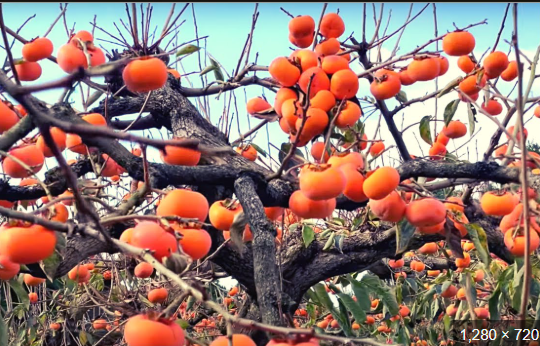
Walk into a high-end Japanese orchard in early summer and you won’t see rows of fruit. You’ll see rows of empty space. On a mature persimmon or apple tree that could naturally carry 300 fruits, the farmer has left exactly 18. Every other bud was snipped off by hand in May, one by one, so the tree pours all its energy into those chosen few.
This is only the beginning.
In July, each surviving fruit is slipped into its own paper bag—sometimes two layers—to shield it from insects, wind burn, and too much direct sun. In August, the bags come off for a few hours each day so the fruit can “sunbathe” just enough to develop perfect colour, then they’re put back on. In September, reflective sheets are spread beneath the trees to bounce light up onto the undersides of apples and pears, erasing any trace of shadow. By October, some growers place tiny plastic crowns or foam cushions under extra-large persimmons so they don’t bruise their own shoulders as they swell.
Every step is recorded in notebooks that look more like lab journals than farm logs: daily temperature, humidity, leaf colour, sugar readings taken with a refractometer at dawn. Many of these farmers are in their 70s and 80s, still climbing ladders at 5 a.m. because only they know exactly how their grandfather’s trees behave.
They are not doing this for export glory. Most never expected the world to notice. They are doing it because, somewhere along the line, “good enough” stopped being acceptable. A peach had to be more than sweet—it had to make you stop talking mid-sentence. A grape had to be worth more than its weight in gold because it carried someone’s entire reputation in its skin.
This is why a single Taishū persimmon can cost the same as a bottle of decent whisky. The tree that produced it gave up everything else for that one fruit. The farmer gave up volume, speed, and profit margins the rest of the world measures success by.
And yet, something unexpected happened. When people finally tasted the result, they didn’t complain about the price. They lined up. They sent thank-you letters. They named their children after the farmer.
The revolution was never loud. It happened one perfectly thinned branch at a time, one hand-polished apple at a time, one ridiculous, obsessive season after another.
These orchards are not factories. They are workshops where farmers spend their lives trying to prove that nature, given absolute respect and a little madness, will reward you with something that doesn’t just feed the body; it lifts the spirit.
That is the real yield of Japanese premium fruit farming: not kilograms per hectare, but moments of silence when someone takes their first bite and forgets to speak.
We are honoured to bring a few of those moments home for you.

